 Amidst graduating and job searching, I’ve once again neglected this blog. Not much exciting to report at all, but during my travels, I’ve drawn a few conclusions about the restorations we’ve seen of classic cartoons in the digital-video-disc era.
The one complaint I always, always see, from fans and experts alike, is how “wrong” the colors look. They’ve been pumped up, they’re too bright, the lines have been “thinned” (which I guess is a confusing way to make one of the side-effects of DVNR its own separate problem). What’s hilarious is that I almost never see someone who actually knows what they’re talking about doing the complaining.
 What I take issue with in general is that most of these guys have likely never handled film elements in any capacity, so the basis of their complaints is hollow. They’re merely saying what they think the cartoon should look like with no solid foundation for their argument.
 After handling some several hundred IB Technicolor elements going back to the 1940s (including 35mm nitrate material) it seems to me that the vast majority of the restorations of classic cartoons done in the digital era are, indeed, an accurate representation of how the films originally looked. I’ll concede that occasionally you’ll find a print with over-contrasted colors due to a film lab goof, but the faultiness of a physical print is immediately self-evident in a way a video transfer isn’t.
There are, of course, exceptions. We all know about the recent problems with the Tom & Jerry Golden Collection using faded CRI elements when better ones were available. Both volumes of Woody Woodpecker and Friends are loaded with transfers from elements of the same mold, where the Eastman deterioration is appallingly evident. The history of the Disney animated feature library on home video is tainted with devious revisionism.* (* Not all revisionism is bad. Sometimes revisionism makes things how they should have been in the first place!)
 But those are issues mostly stemming from source material. When it’s done right, like it is on most of the Walt Disney Treasures and all of the Looney Tunes Golden Collection releases, it’s virtually a perfect representation of seeing the cartoon back in its original release. The naysayers have no idea what they are talking about.
Or at least I thought they didn’t.
 My impressions before now have been entirely based on viewing the DVDs on my computer or standard definition TV sets. (At this point in my life, I don’t own a TV set of any kind and foresee no reason why I should buy one.) Over the holidays, I visited with a few chums who are blessed enough to own those fancy high-definition flatscreens and watched many cartoons, including a few of the commercial Warner releases, there.
Now I finally understand where the detractors are coming from. Some of the color restorations by Warners do indeed look awful when played on flatscreen TVs. I haven’t sampled the new Blu-Ray Looney Tunes release, but for some reason the flatscreen sets distort those DVD releases to no end, pumping up the color to levels I had never seen before. Literally an unpleasant florescent glow comes off the screen. I actually watched one cartoon on my computer while another copy of the disc played simultaneously on the flatscreen to see if I was imagining things. I wasn’t.
 So what makes these Looney Tunes releases look so bad on flatscreens, while other cartoons of the same era don’t? I have no answer, really, other than the issues are not stemming from the restoration people. Something is getting lost in translation at someone else’s end.
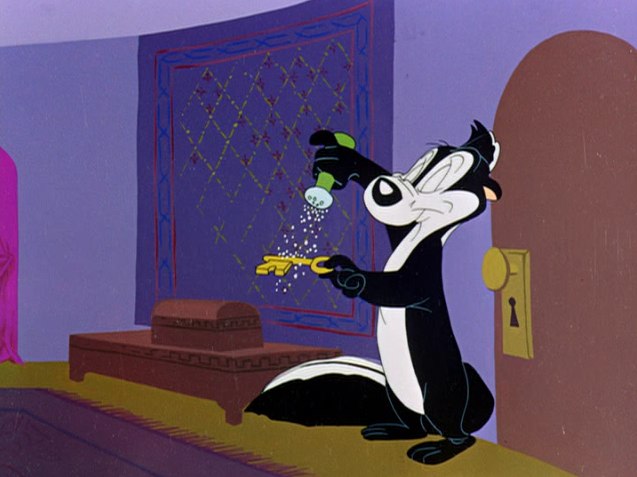
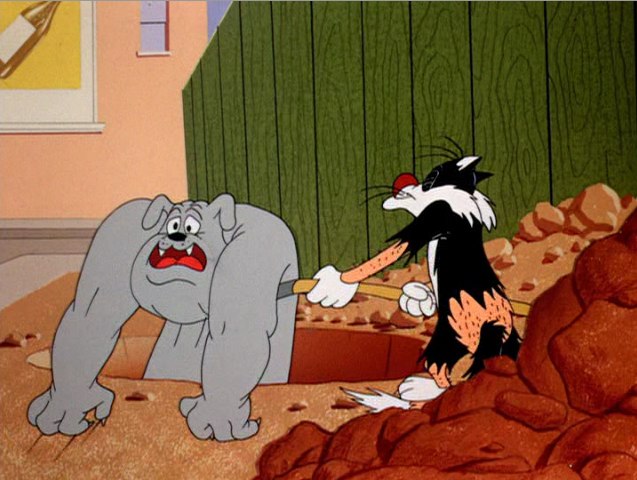
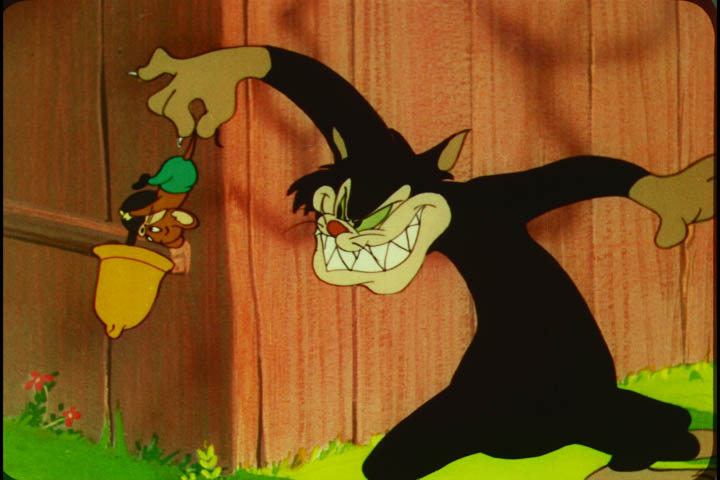
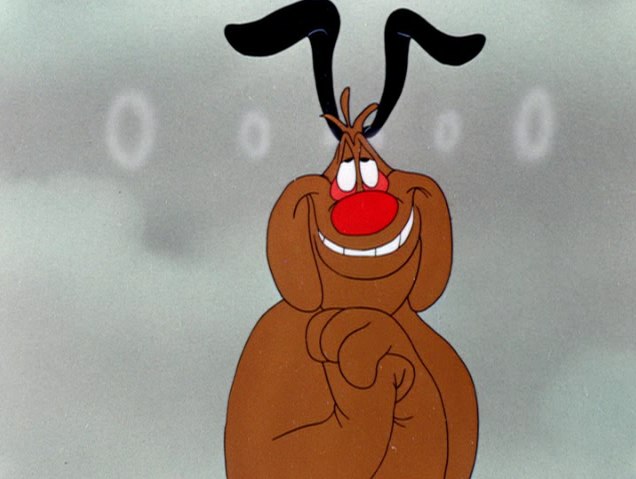
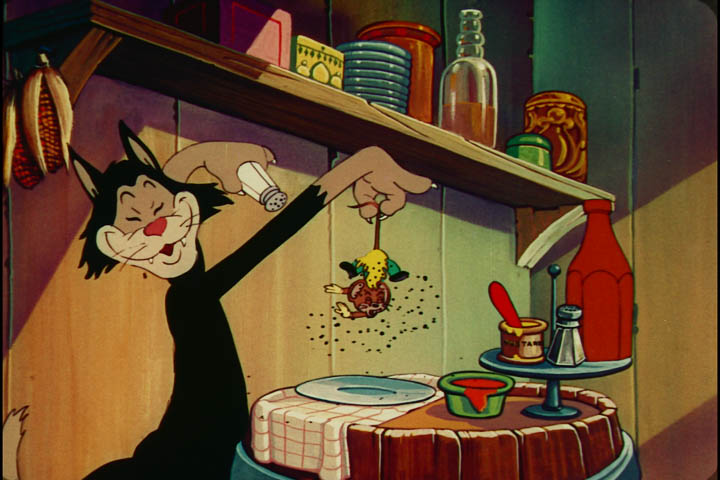
The images littering these posts are from two different releases compiling underrated 1940s and 1950s animation. The Warner cartoon images are taken from last month’s Looney Tunes Super Stars – Pepé Le Pew: Zee Best of Zee Best (from by Warner Home Video) and those from the Famous Studios cartoons are from the upcoming Noveltoons: Original Classics (from Steve Stanchfield’s Thunderbean Animation). Different source material (“Pepé” is from original negatives, “Noveltoons” is made up of mostly positive elements), highly similar and colorful results. So does this mean Steve is pumping his releases up to create candy-colors that never were? Kinda doubt it. Case closed.
(As a side note, I may be a bit biased in Steve’s favor. I loaned material for him to use, checked screener copies, and even provided audio commentary that I highly recommend you don’t listen to. But you should still buy it at any rate.)