Fellow youthful animation historian Charles Brubaker has been busy at work interviewing the surviving personnel of the DePatie-Freleng studio. The first of the interviews he’s posted is with DePatie himself: part one here and part two here (part three forthcoming). Charles’s research will be a welcome addition given the lack of information available about the studio. Leonard Maltin unwisely chose to write off the whole studio by just stating in Of Mice and Magic that the cartoons got worse every year.
For the record, I love the first few years of DePatie-Freleng cartoons, the Pink Panther series specifically (theatrical animation’s last creative burst). They serve as a reminder that limited animation doesn’t have to be ugly, unfunny, and badly timed. A cartoon like Dial “P” for Pink is as sharp as any of the better Bugs Bunny shorts Freleng directed, only done for a lot less money. Even Bill Lava’s soundtrack is a great exercise in blending the two Mancini themes.
It’s a shame though that Charles didn’t ask DePatie why the Pink Panthers are usually very funny while the Daffy Ducks the studio did were sheer eye rape.
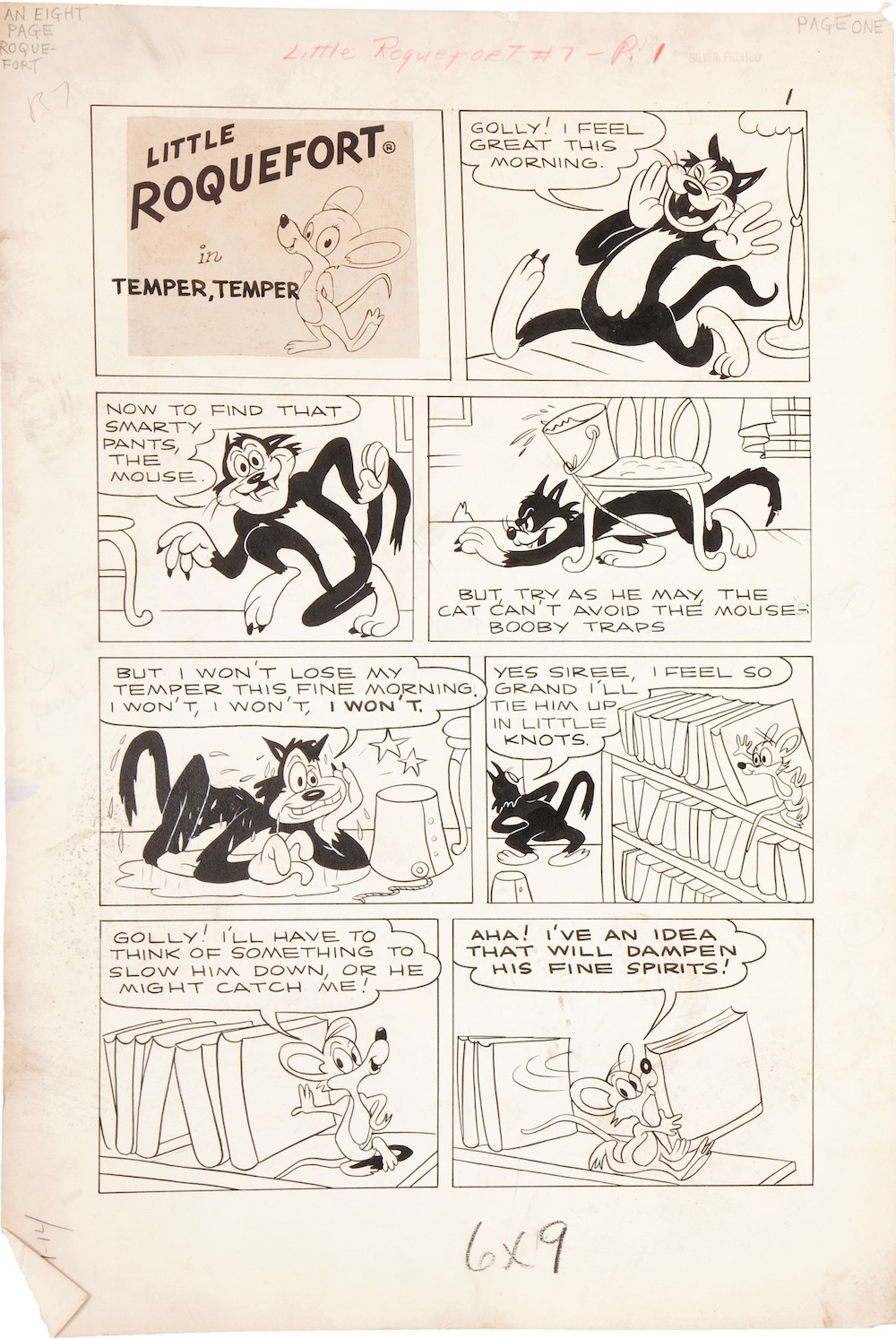
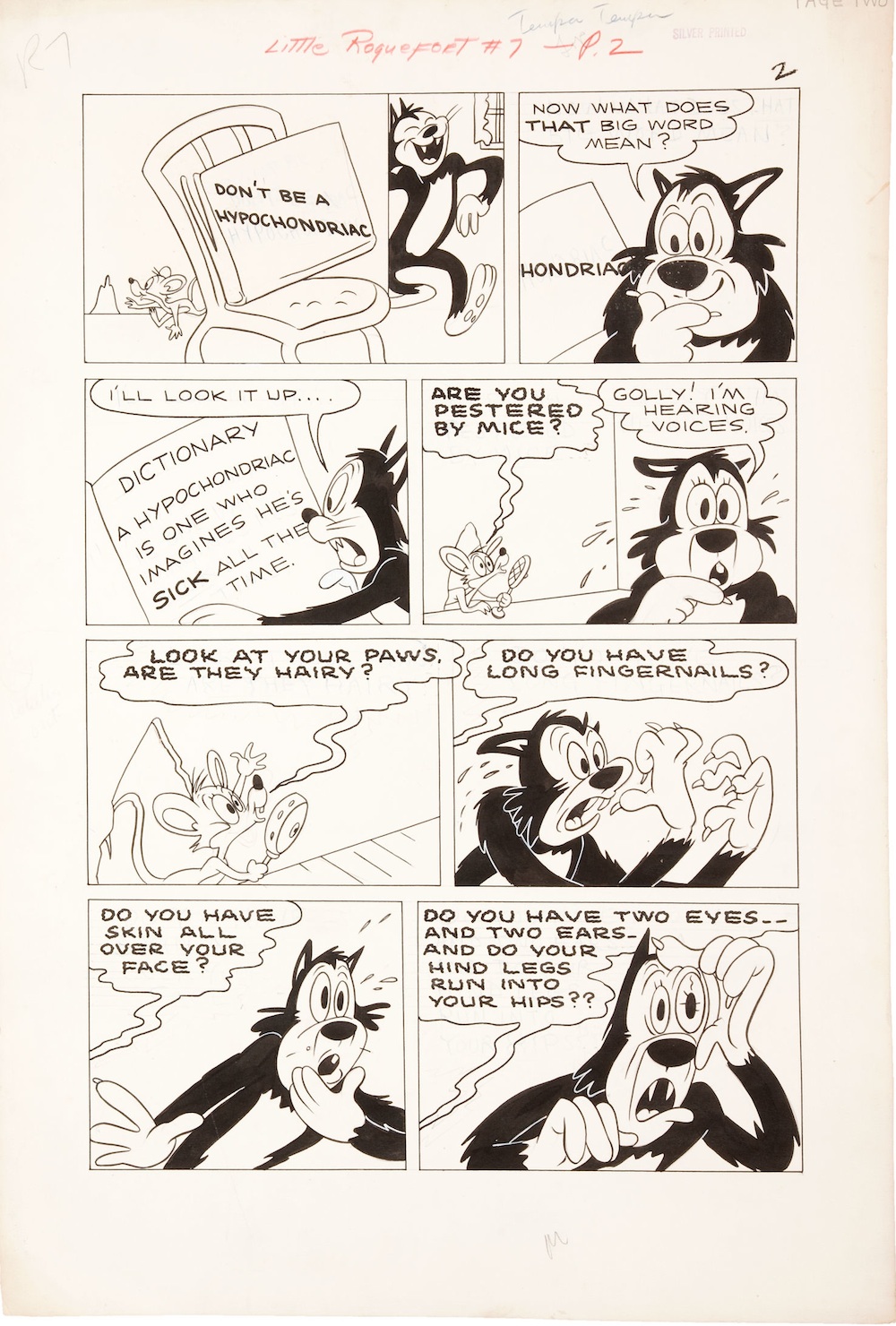
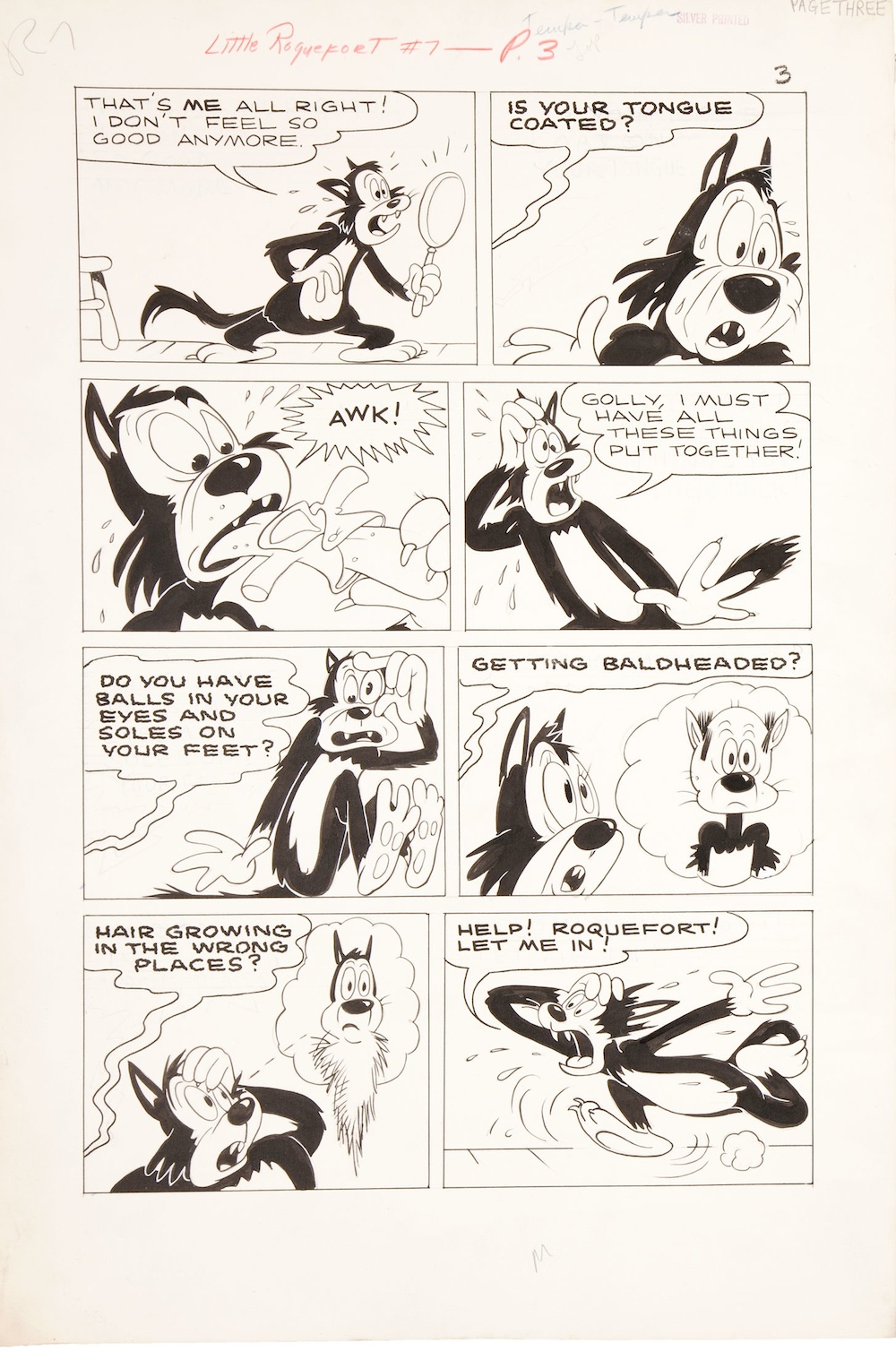
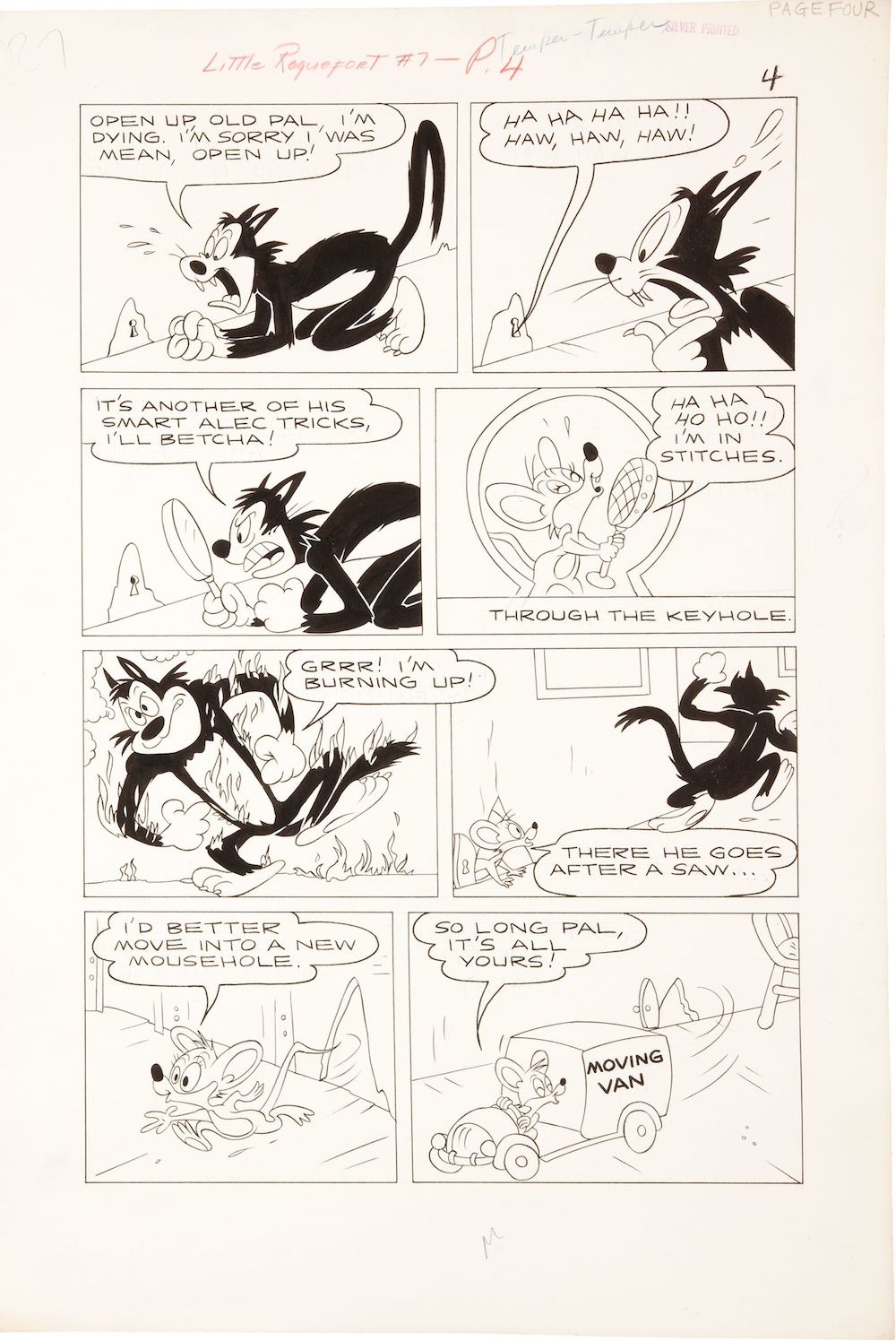
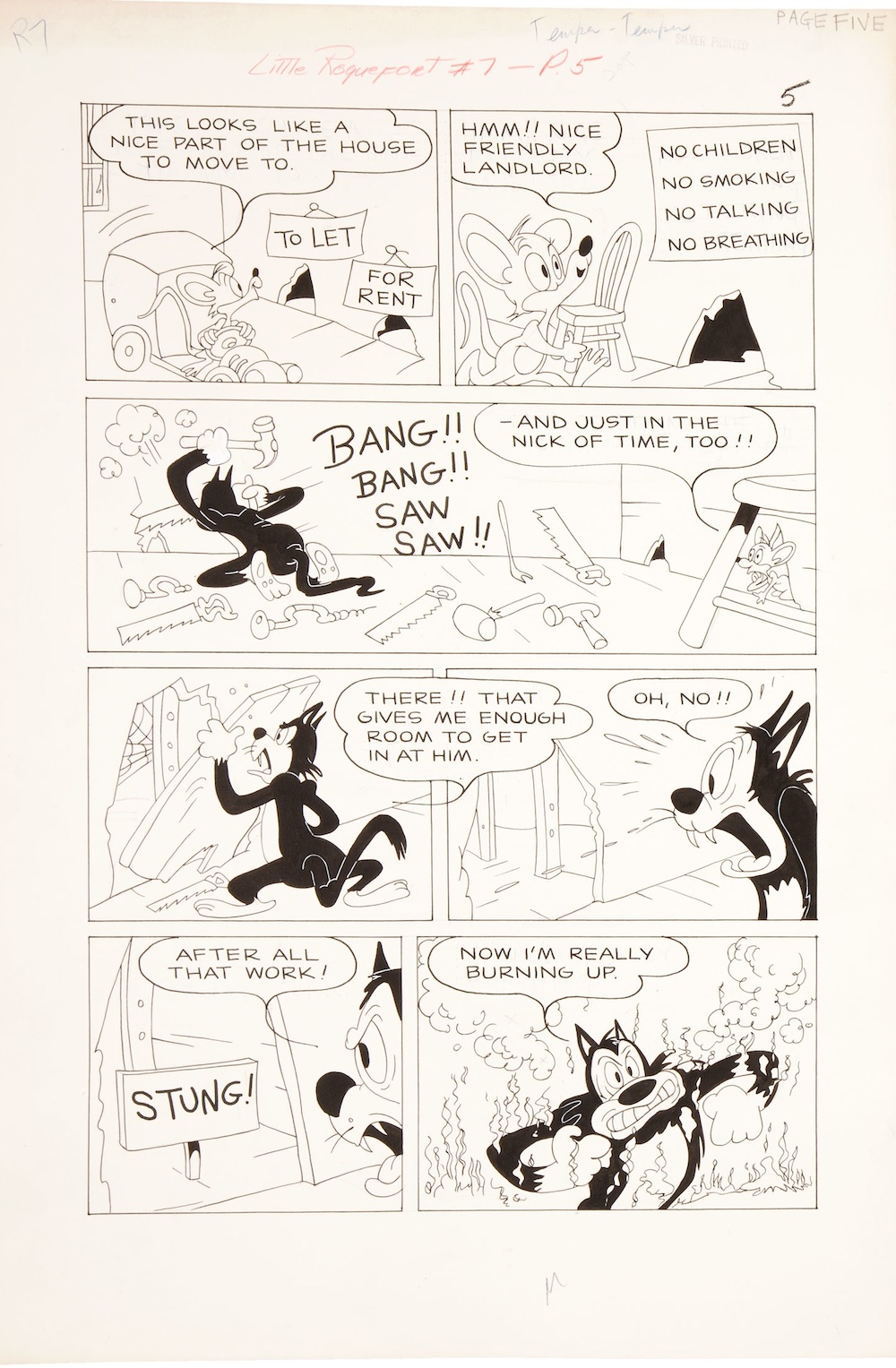
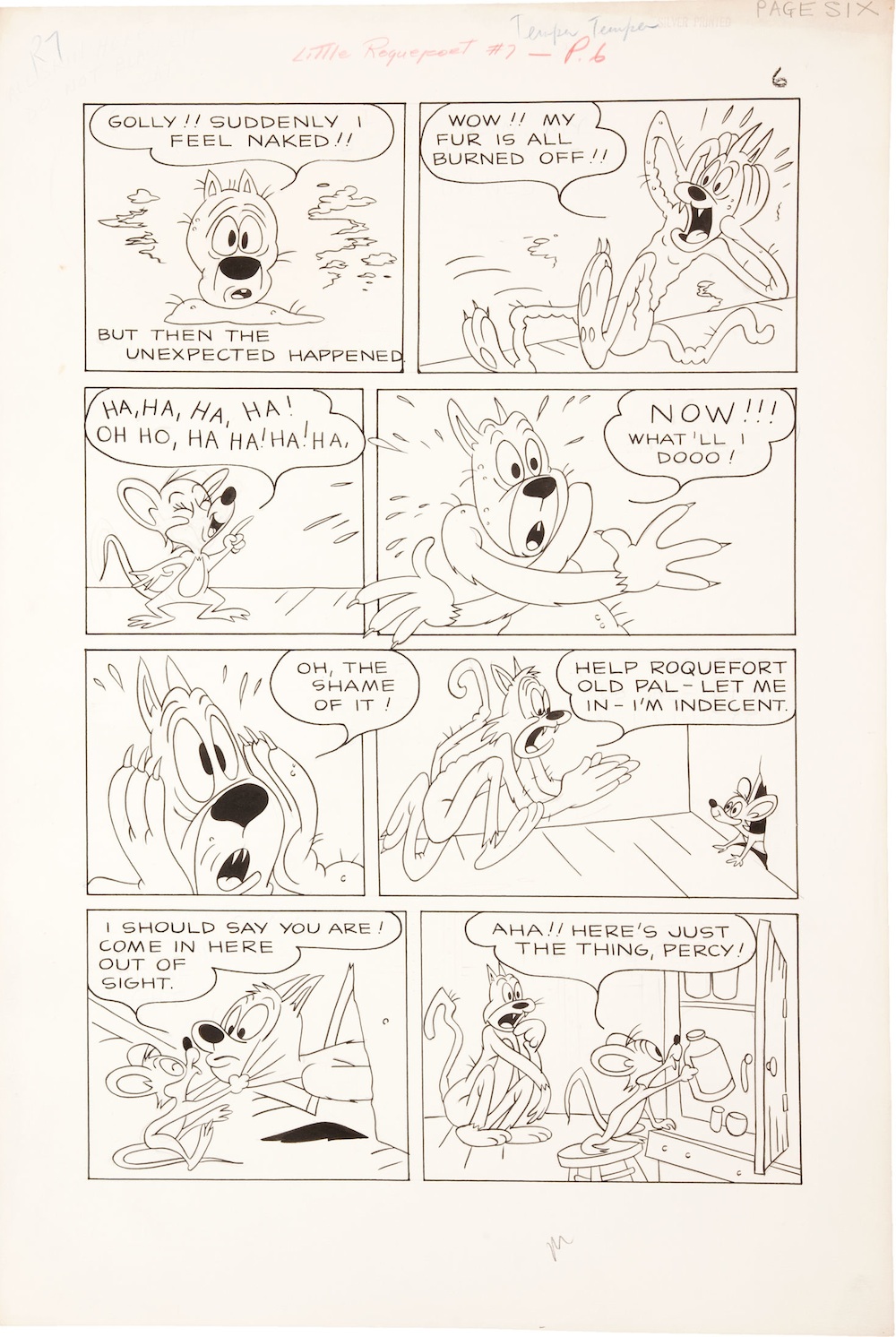
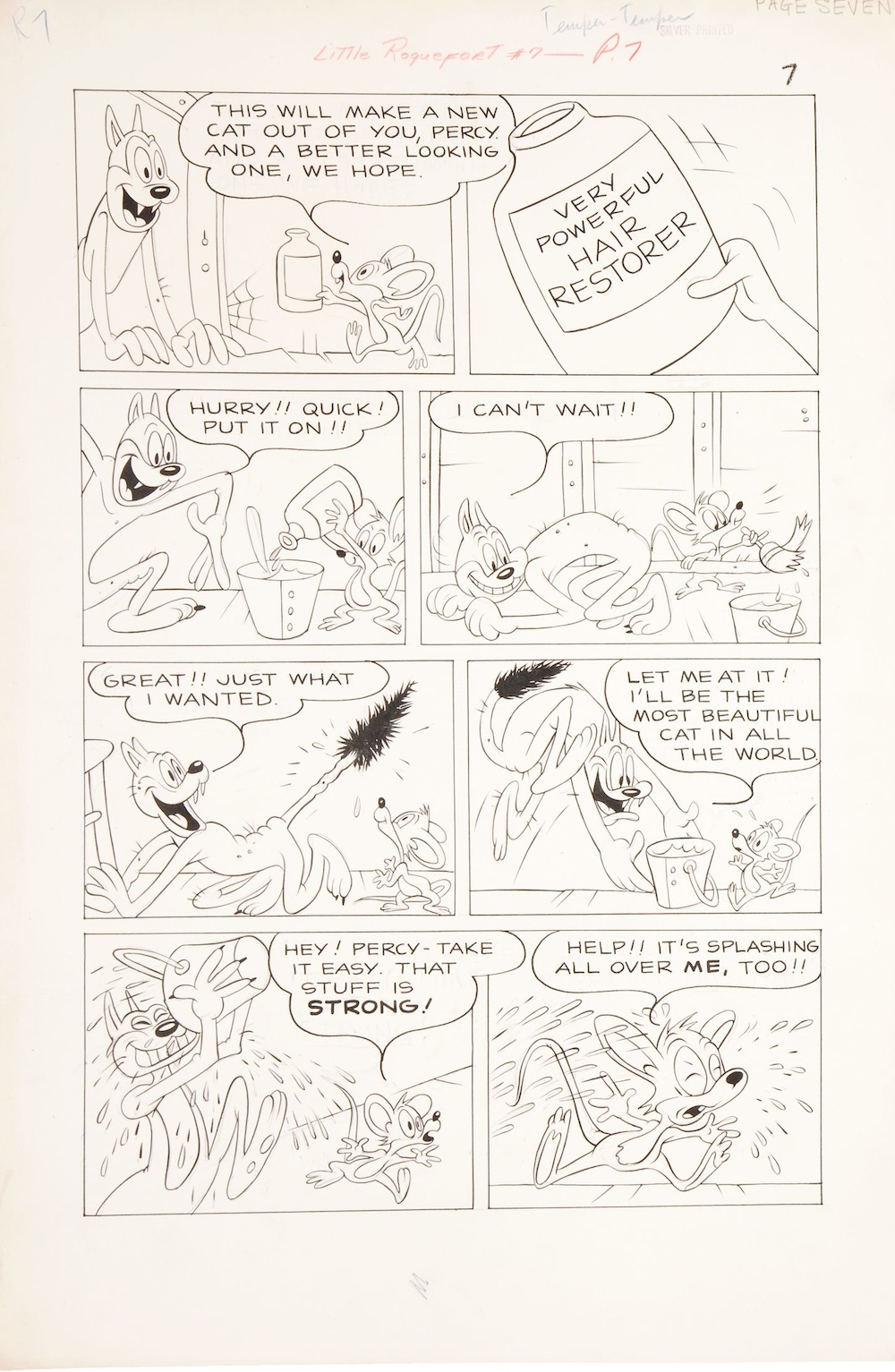
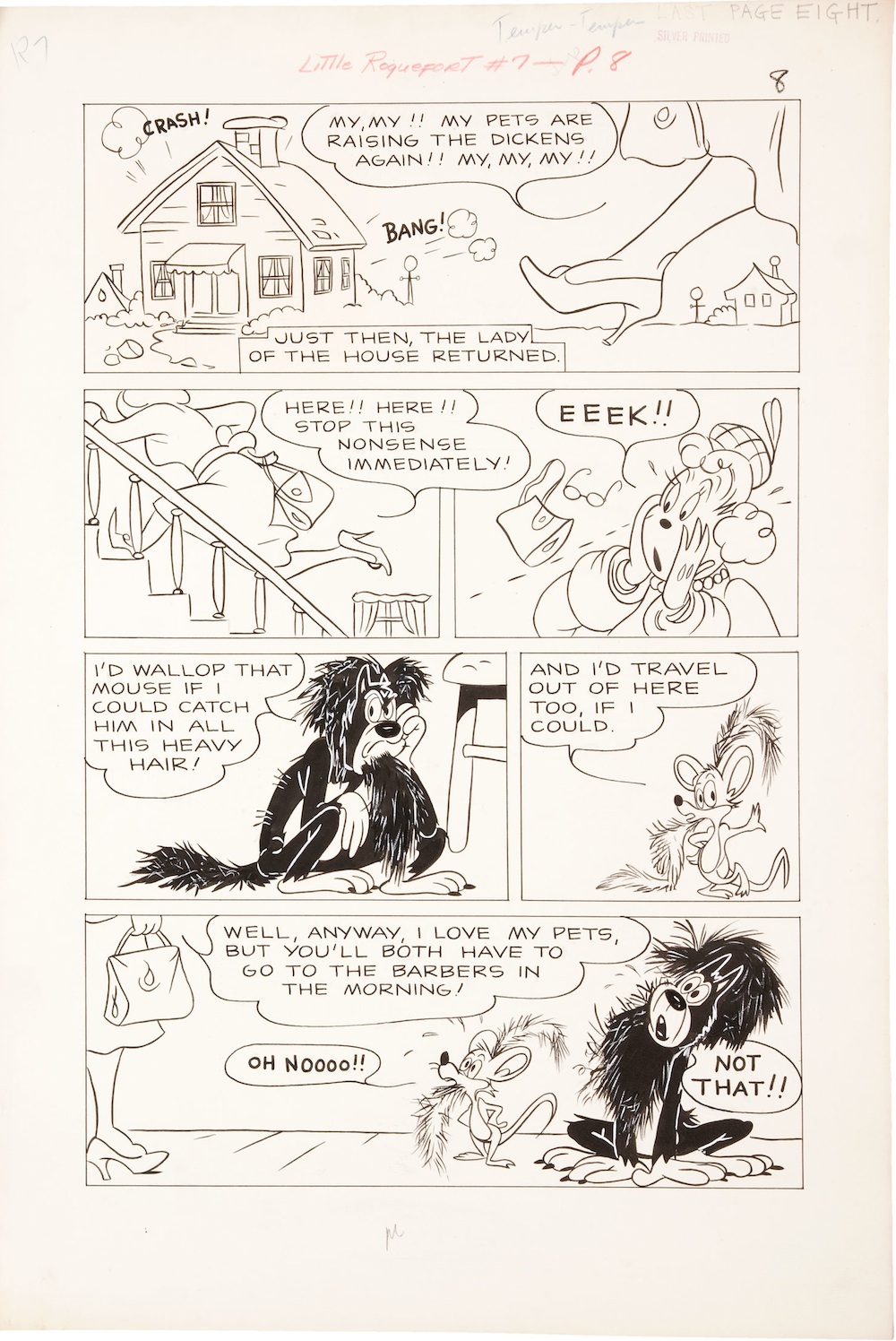
The original art for this 8-page story drawn (and probably written) by Jim Tyer for Little Roquefort #7 was up for auction recently. I watched a pedigreed Tyerphile plan to snap it up, both of us thinking there was no way anyone would go after something like this. We were stupefied by the outrageous price paid for it, at least three times more than it was worth. Fortunately the pages were scanned at a very high resolution, so we can all enjoy this for the unbridled lunacy it is.
Mike Barrier was kind enough to get back to me with the production numbers of MGM cartoons that were actually made that I was lacking, so the filmography is complete in that regard. Mike added this note about abandoned cartoons too:
Rudy Ising told me long ago that the “rejected” and “abandoned” labels shouldn’t be read suggesting that someone other than the director had rejected a cartoon. Those were just the numbers of stories that the directors scrapped before they got very far into work.
Another original titles discovery, nomn! Production #1072 is the excellent Friz Freleng cartoon I Taw a Putty Tat. For my money, this is probably the best of the Tweety & Sylvester series, although there would be many worthy contenders for that title throughout the years (Putty Tat Trouble, Ain’t She Tweet, Birds Anonymous, Hyde & Go Tweet). Freleng deserved his Oscar for instilling much needed personality into the two-character chase format, and this is a fine example of it at its most successful.
Just so this is not quite breaking from the barrage of Tashlin posts, some of the framework with the owner is lifted directly from Puss N’ Booty. Comparing that short with this one doesn’t accomplish a ton other than showing the differences in what satisfied each of the very different directors. The Tashlin cat-bird picture is a borderline cinematic masterpiece, whereas the Freleng shows how he perfected the art of directing meticulous and absolutely hilarious comedies. Every scene and gag works, right down to the frame. A great deal of this credit should go to Freleng’s right-hand man Hawley Pratt, one of Golden Age of Animation’s unsung greats whose amazing draftsmanship made so much of this happen.
There are some instances here and there in this short where it isn’t fine-tuned though. Tweety’s “Forgot my wittle hat again” is out of sync. Sylvester’s body isn’t properly shot after he inhales Tweety, and his lipsync is distractingly all over the place when he enters as a Swedish maid. I might attribute this to the fact that this one was rammed through the system as a Cinecolor short to help cash in on the popularity of the new comedy team after the Oscar win for Tweetie Pie. (Had it gone the ‘normal’ way in Technicolor, it wouldn’t have seen release until early 1949 at the latest.) Given how all of these directors were essentially well into working in an artistic vacuum at this point, it’s amazing how perfected they are most of the time.
Gerry Chiniquy is the star animator of this cartoon, animating the lion’s share of the footage. I’ve had reservations about his drawing style before (it’s pretty wiry, isn’t it?), but it’s the actual animation that counts, and he’s absolutely hilarious in the way he phrases his actions (in the 1940s anyway). The scene of Sly missing the first door only to be slammed by a second is a different kind of crazy than the Tashlin or Clampett kind. The cat goes through a ton of poses in a very short length of time, in a very limited kind of movement, but each of them reads properly.
The maid gag (Chiniquy again) may be one of the most underrated gags in cartoon history. While it proves once again Freleng had the best explosion timing of any director, some of the covert racism in the punchline is actually acceptable because the reference to his scorched flesh and passing out is the focus. Most other directors, including Tex Avery unfortunately, would have been satisfied with fading out after the results of the explosion, making the punchline that Sylvester sort of looks black.
Virgil Ross doesn’t get a ton to do in this cartoon, which is a shame. His drawings of Tweety are true things of beauty in the Warner art library, and there’s a real elegance to his approach in animating the characters. Ross makes a lot of what he’s doing easy when it’s really insanely difficult. When Tweety shoves the bulldog into the cage with Sylvester, he has the dog slowly scrunch up with Sylvester registering a look of horror, then machine guns to the next pose with the two face to face. You won’t find this kind of subtlety in many other cartoons, because it’s a kind of long-gone subtlety that doesn’t draw attention to itself.
Manny Perez gets away with a New York-patented popping effect that Bob Jaques writes about here. Rather than draw Tweety stepping away, Perez just makes him disappear completely, making the timing of Sly crushing his own foot even funnier. For what its worth, Ralph Bakshi always speaks highly of Manny Perez’s greatness whenever he talks about the old guard that regularly worked for him.
The uncredited Pete Burness scenes are a little awkward looking. The accenting of the poses is a little too elongated for the Freleng unit animation style, and his Tweety is between good off-model and bad off-model. The acting on Sylvester is fine, probably due to Burness’s experience animating Tom Cat for years.
I don’t have much to say about Ken Champin’s animation here. His scenes are well drawn and make the gags read as well as Freleng could hope for. Sylvester trying to stubbornly shove Tweety into his mouth could’ve been very easy to mush up, but it’s solid, man, solid.
There’s a large amount of tactful violence in Freleng’s cartoons in general. Sylvester suffers some fairly brutal treatment, but because the ridiculousness of the violence rather than the violence itself is emphasized. Not actually showing the carnage of the bulldog mauling Sly, but the hilarious covered, bouncing Chiniquy cage instead, is a completely Freleng touch. It’s too easy to imagine the same gags falling flat in a later Tom & Jerry or Famous Studios cartoon.
Another breakdown is coming up. It might have original titles too.