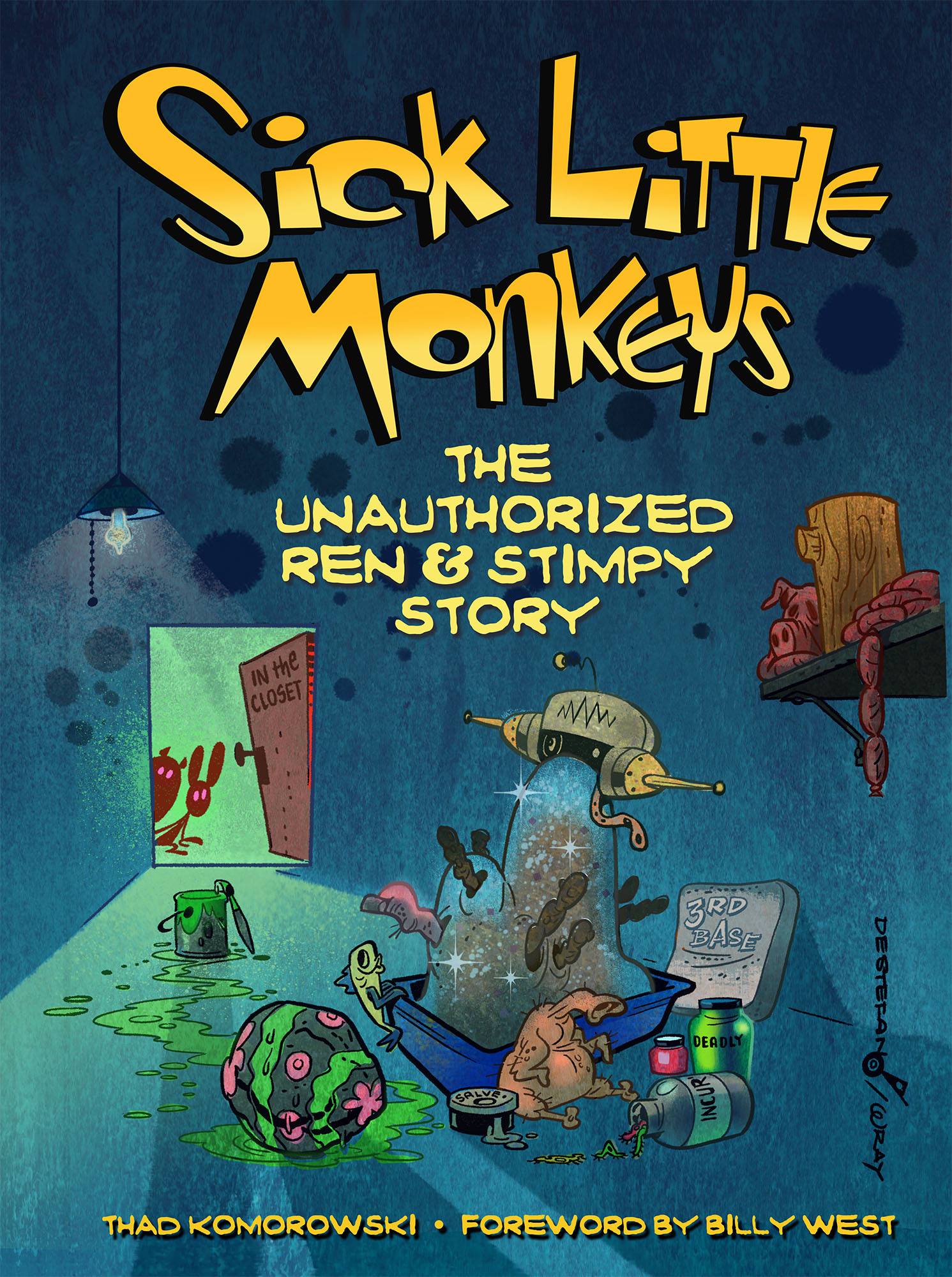
 When I made the decision to move my blog to a new server, I had to purge a lot of my online archives in the process. A lot of stuff is lost to cyberspace forever, but I can still salvage the most important things. One item that I regret got purged was the Emery Hawkins interview that was exclusive to this site. I’ve put it back up online again, and you can view it at this link.
Damage Control
Filed under classic animation, people
Beauty

This post has no meaning other than to get that repulsive DVD cover out of sight.
Above and below are some beautiful illustrations by Bob McKimson (backgrounds by Richard Thomas) for the 1948 Capitol Record Bugs Bunny and the Tortoise. They really need to get a CD collection of those kiddie records out. Along with the beautiful illustrations by McKimson and others, they’re a riot to see and hear how they tried to make the gritty Warner stable of characters more ‘suitable’ for children, long before the age of ‘imitable behavior’. (As in Elmer and Sam can’t shoot bullets – just gumdrops.)

Filed under classic animation
Suicide
If you want your DVD to bomb in sales, a sure-fire way is to give it a cover like this.

They can’t be serious about releasing this, can they? Really?
Filed under crap
Bobe Cannon Reel
Bobe Cannon was one of the all-time great animators from the Golden Age. He did excellent and unique work for Tex Avery, Bob Clampett, John Hubley, and Chuck Jones; not too many other animators can boast a resume like that. For some reason, I rarely see him mentioned by anyone. It probably had to do with his death in 1964 than anything else.
That he kept his unique style in drawing, posing, and timing under such individualistic directors is even more amazing. I’ve long thought that that fact alone sort of exposed the misconception [lie] that all the Jones animators did was in-between his poses. Cannon’s animation of Daffy Duck for both Jones and Clampett gives the character a bit of naive mischievousness – the pigeon-toed walks really help put this across.
In the Jones cartoons, Cannon didn’t really have much of a grasp on ‘normal’ lip sync. This isn’t a dig, it’s just really obvious compared to the animation of Ken Harris or Ben Washam, who paid extreme attention to every tooth shown and every tongue flap. Cannon seemed more interested in how many ways he could get animate dialog without doing this.
I don’t think it’d be wise to attribute ‘smear’ animation solely to Cannon unless there are some on-record statements stating something to that effect from some of the other animators; several of them picked up on the technique during that time period (Harris, Virgil Ross, and Rod Scribner in particular). Given Cannon’s stylized approach to his work, it could be possible though.
This 17-minute reel is made up of his work from the 1930s and 1940s at Schlesinger’s/Warners, MGM, and UPA, following the trials and tribulations of mid-20th century superstars Bugs, Daffy, and Porky (and lesser-lights like Droopy, Spike, and the Fox and Crow).
Cannon had a fairly successful career directing shorts at UPA, the most popular of them being Gerald McBoing Boing. His shorts primarily had children as the central theme and characters, and they ranged from great (Wonder Gloves, Willie the Kid) to not-so-great (Christopher Crumpet, Madeline). Michael Sporn has shared some wonderful work of Cannon’s from Hubley’s Moonbird and I hope he has more to share from that period.
https://videopress.com/v/wp-content/plugins/video/flvplayer.swf?ver=1.15
Clips taken from:
Hold the Lion Please (1942), Porky and Daffy (1938), The Magic Fluke (1949), Tom Turk and Daffy (1944), Rover’s Rival (1937), Out-Foxed (1949), Porky in Wackyland (1938), Hare Tonic (1945), The Dover Boys (1942), Senor Droopy (1949), The Daffy Doc (1938), Hare Conditioned (1945), Robin Hoodlum (1948), Super-Rabbit (1943), To Duck or Not to Duck (1943), Doggone Tired (1949), Odor-Able Kitty (1945), Wags to Riches (1949), Coming Home (1945)
Filed under classic animation